One subscription, The Lantern, opens everything in the app: a morning gospel study for you, a new bedtime story and song every night, and a place to keep your family’s own stories.
No commitment. Cancel anytime. A new scripture story is waiting on the website and in the app every morning by 5 AM.
Join other LDS and Christian families. Cancel anytime.
One plan, and everything in the app comes with it. Managed securely through Payhip. Cancel anytime.
Everything in the app, for the whole family: a quiet gospel study for you each morning, a story and a song for your children each night, and a safe place to keep what your family remembers.
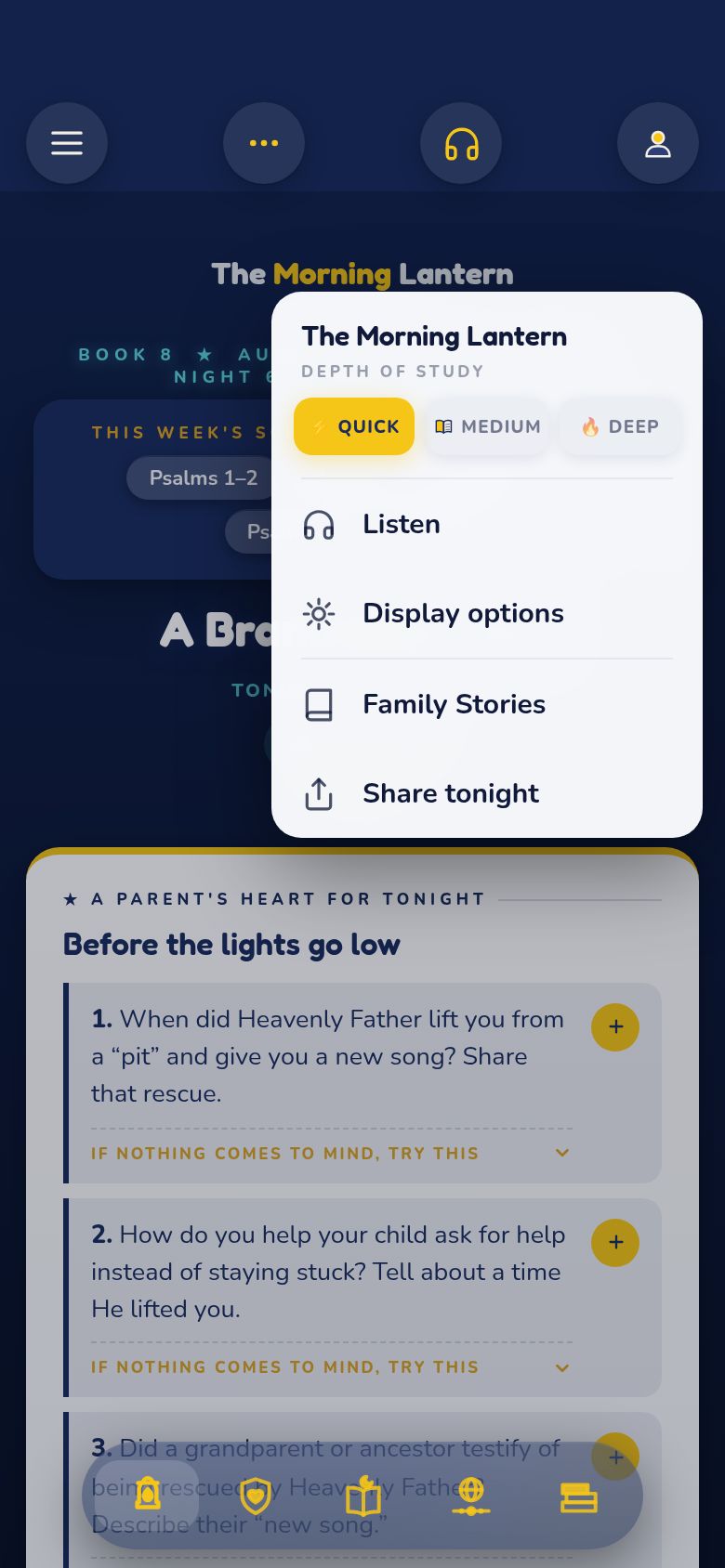
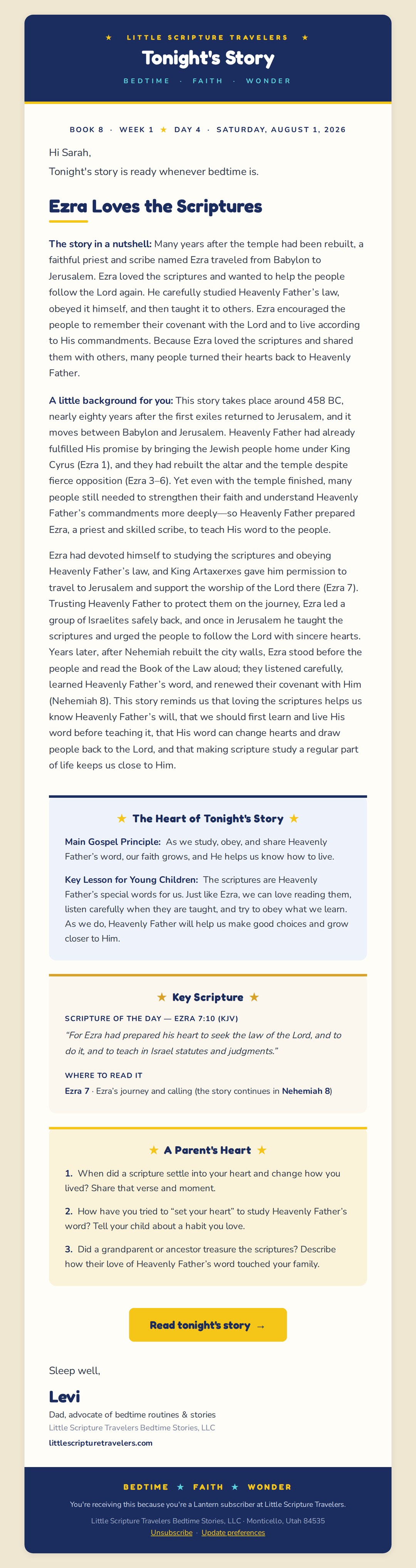
Waiting by 5 AM every morning: tonight’s scripture, the gospel principle behind it, and the background that brings it to life. Pick Quick for a few minutes, Medium for a little more, or Deep for a full study. A Parent’s Heart gives you three questions to ponder all day, so you reach bedtime with your own story ready to share.
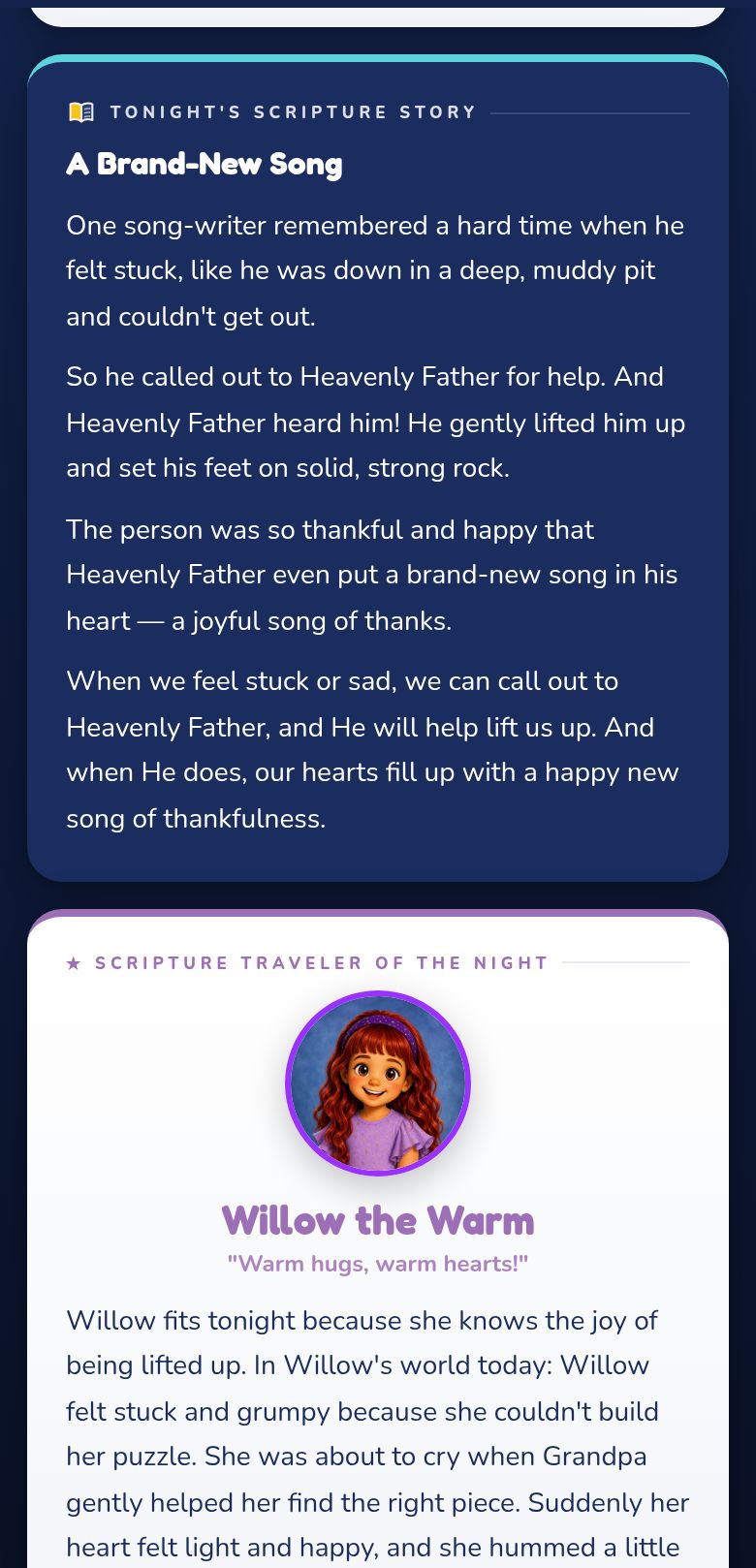
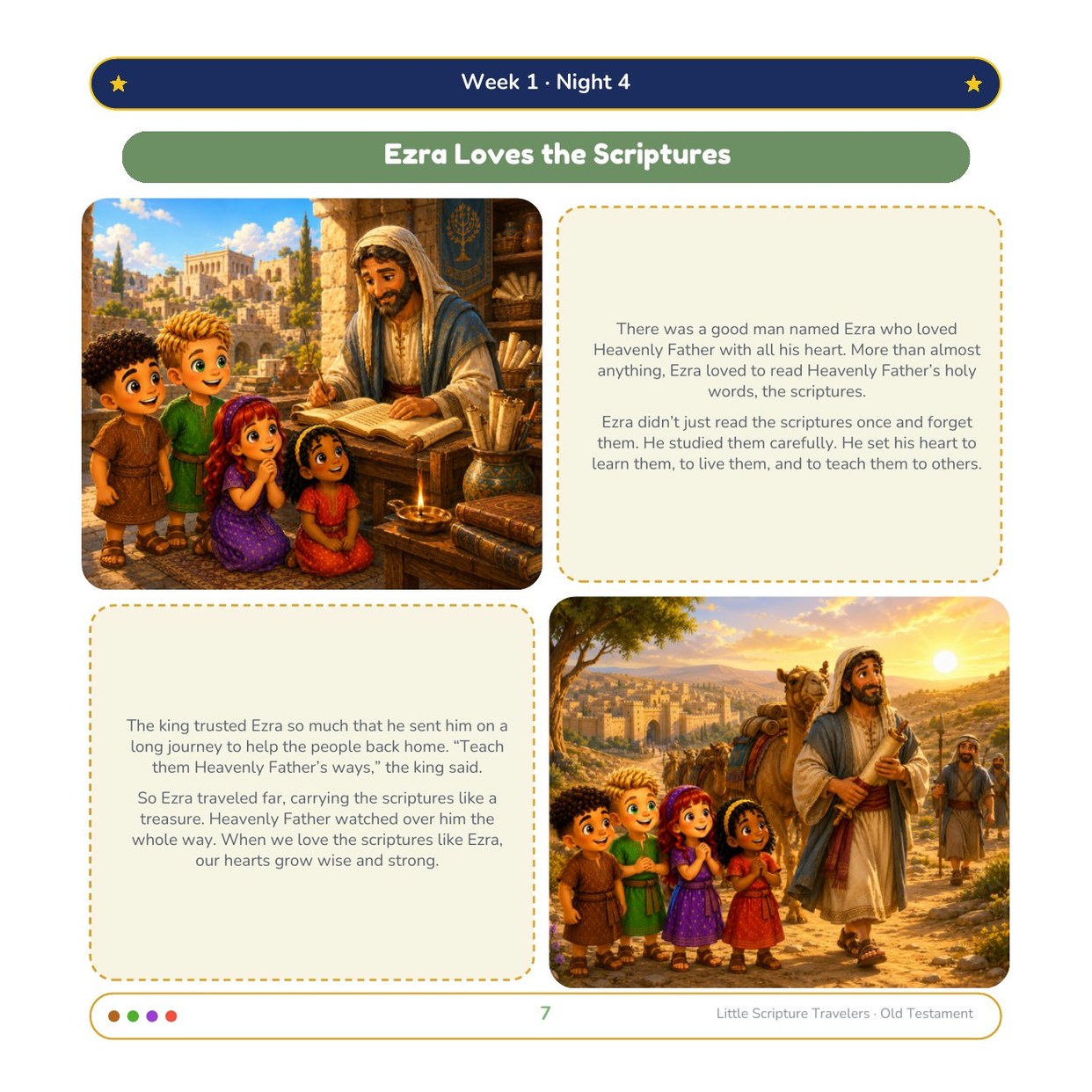
A short, gentle scripture story for every night, told in the smallest words that still carry the meaning, with one of the four Travelers beside it. Read it to your children yourself, or tap Listen and the app reads it aloud.
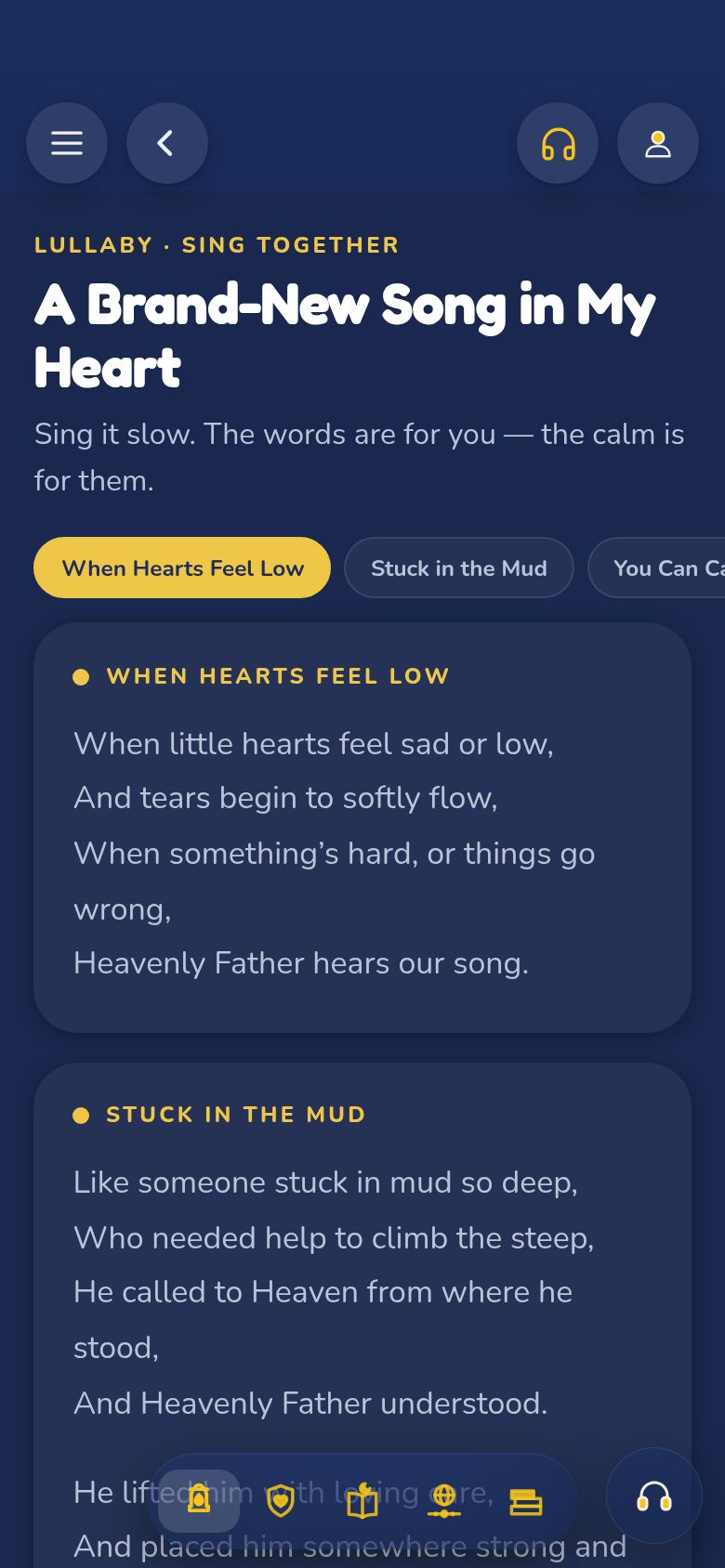
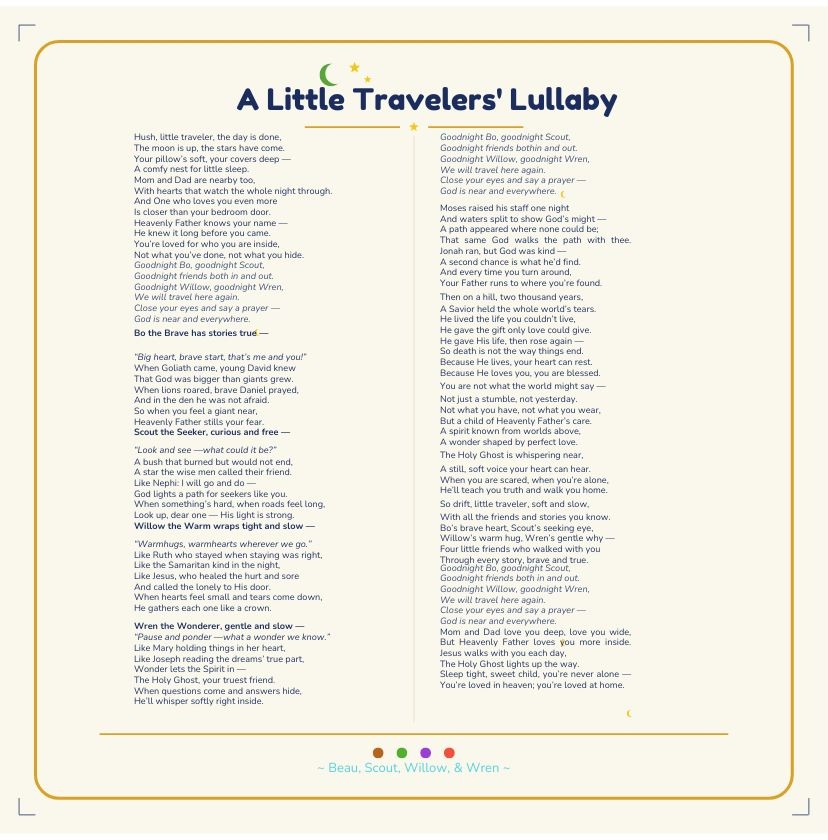
Every story has a song of its own, and the Lantern Lullaby is the same comforting song every night, so your child knows bedtime is here. The lyrics sit right under the player, each line lighting up as it is sung. Tap a line and the song starts from there.
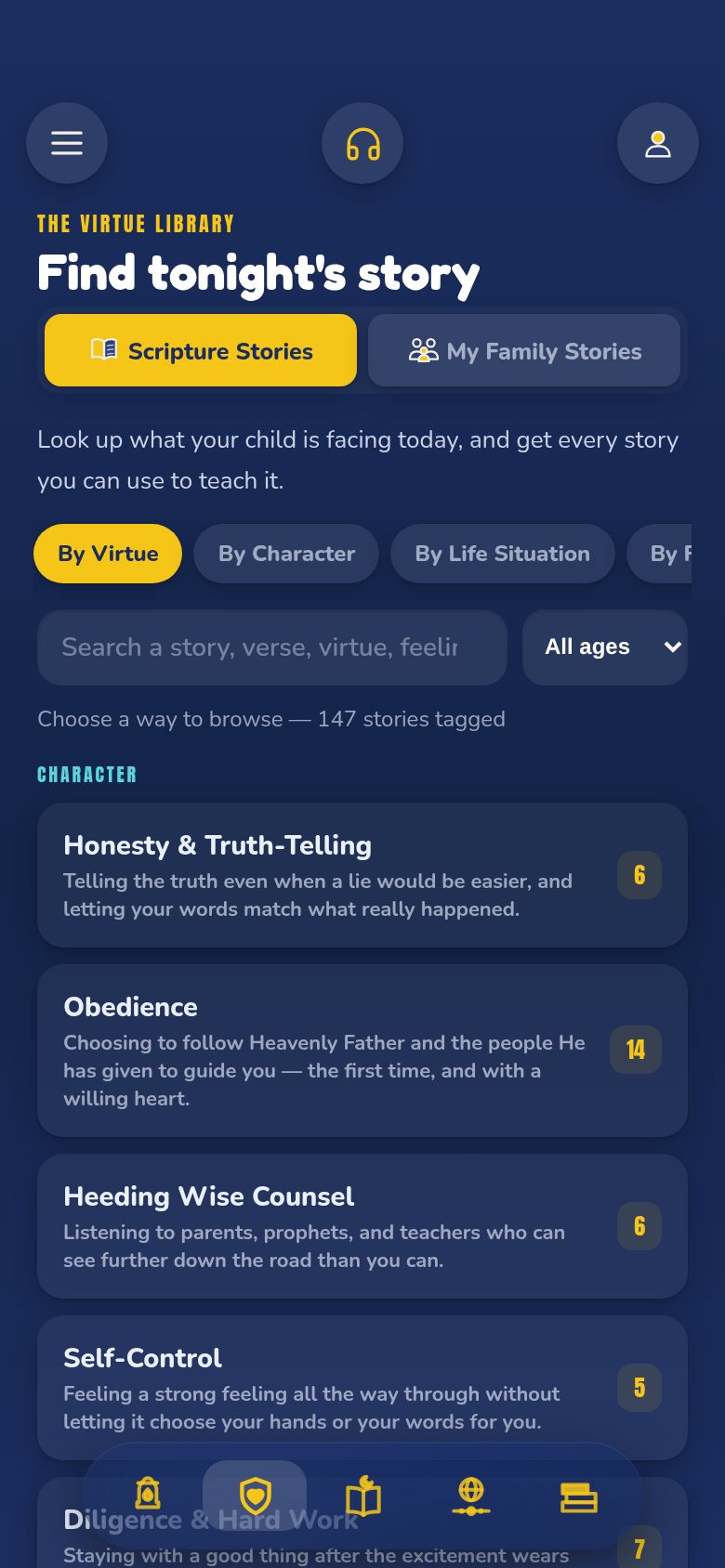
Your child is facing something real tonight: a fib, a lost temper, a hard goodbye. Look it up by virtue, by character, by life situation, by feeling or by scripture, and the story that fits is already there.
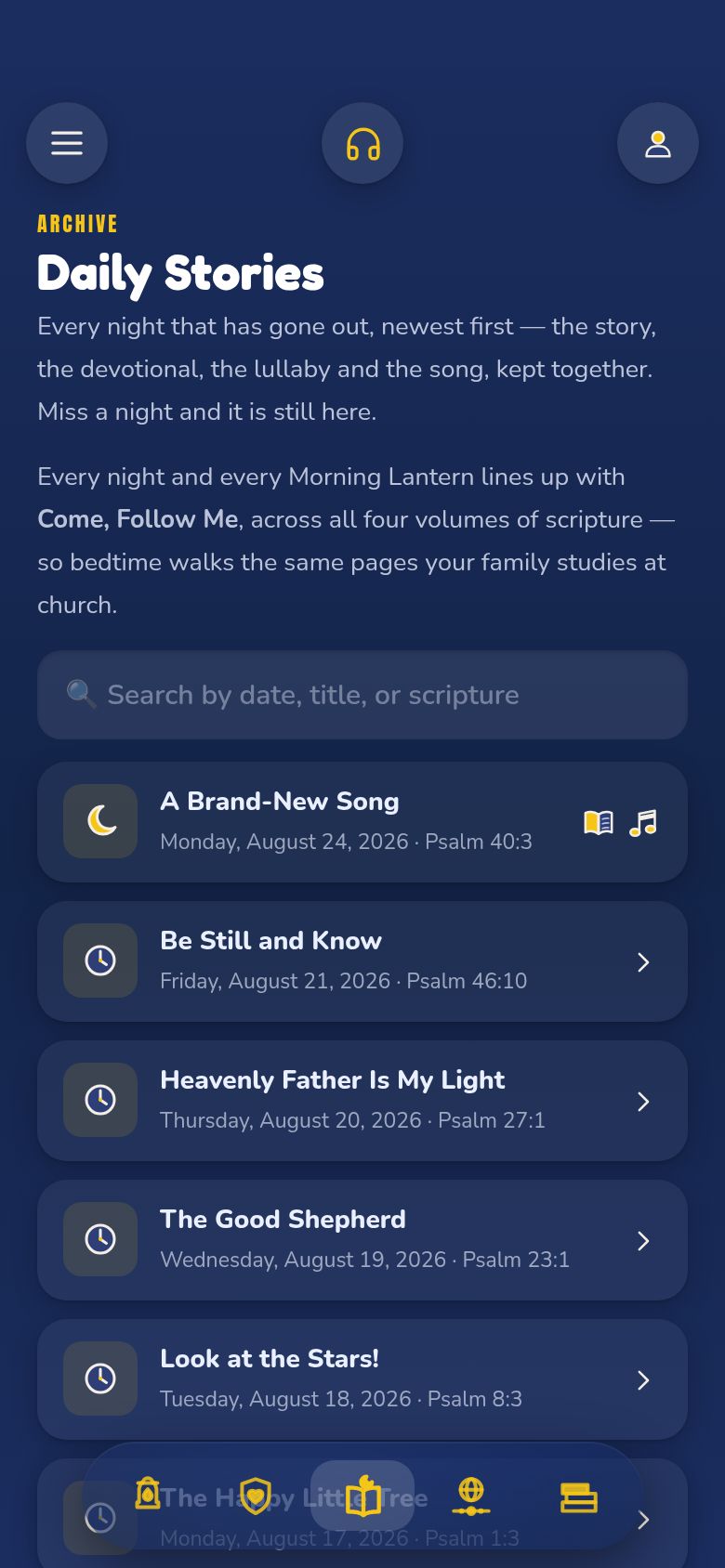
Every night that has gone out, newest first, with its story, its Morning Lantern and its song kept together. Search by date, title or scripture to find a favorite again.
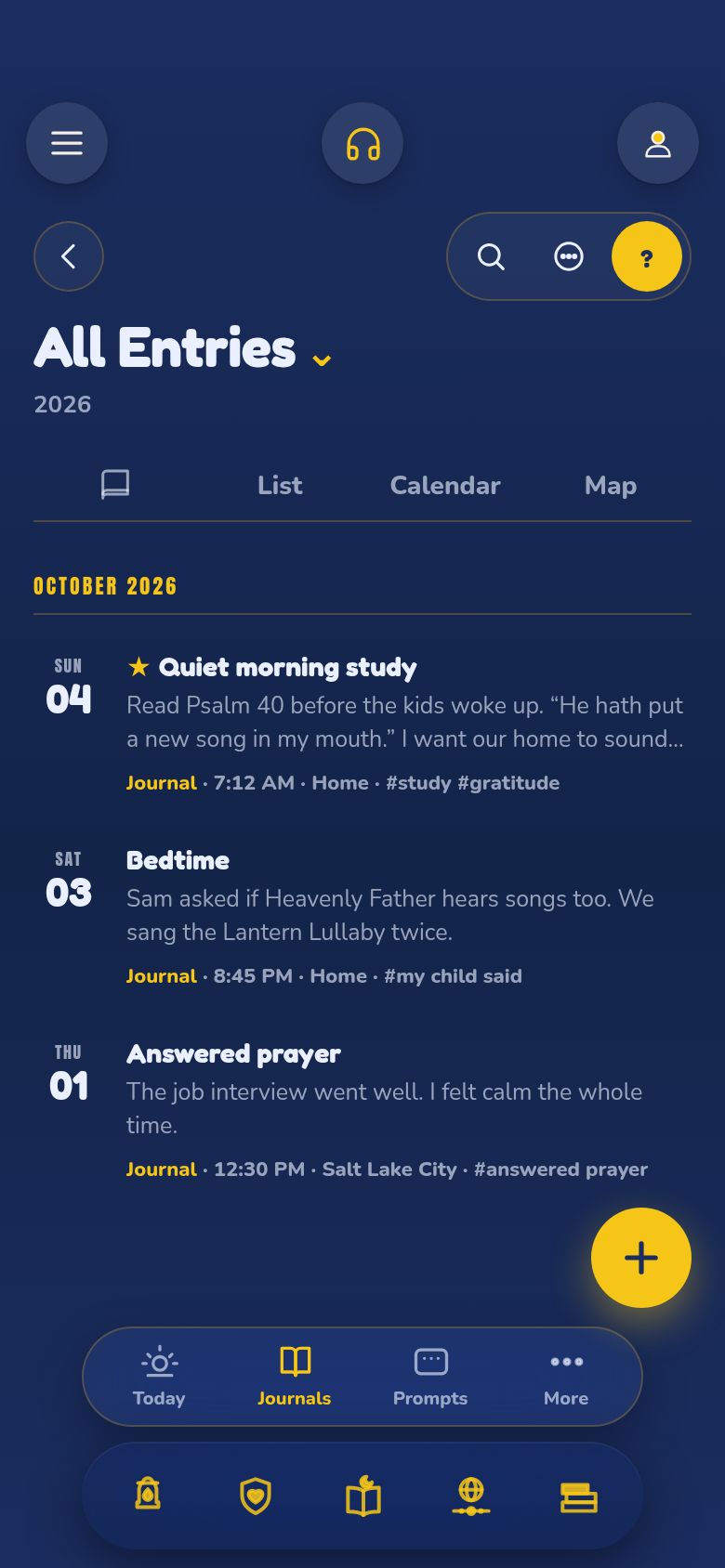
Your own private book. Type, or just talk and the app writes it down. Keep voice memos, write from a daily prompt, and look back by calendar or on a map of where you were. The night’s reflections are filed here too.
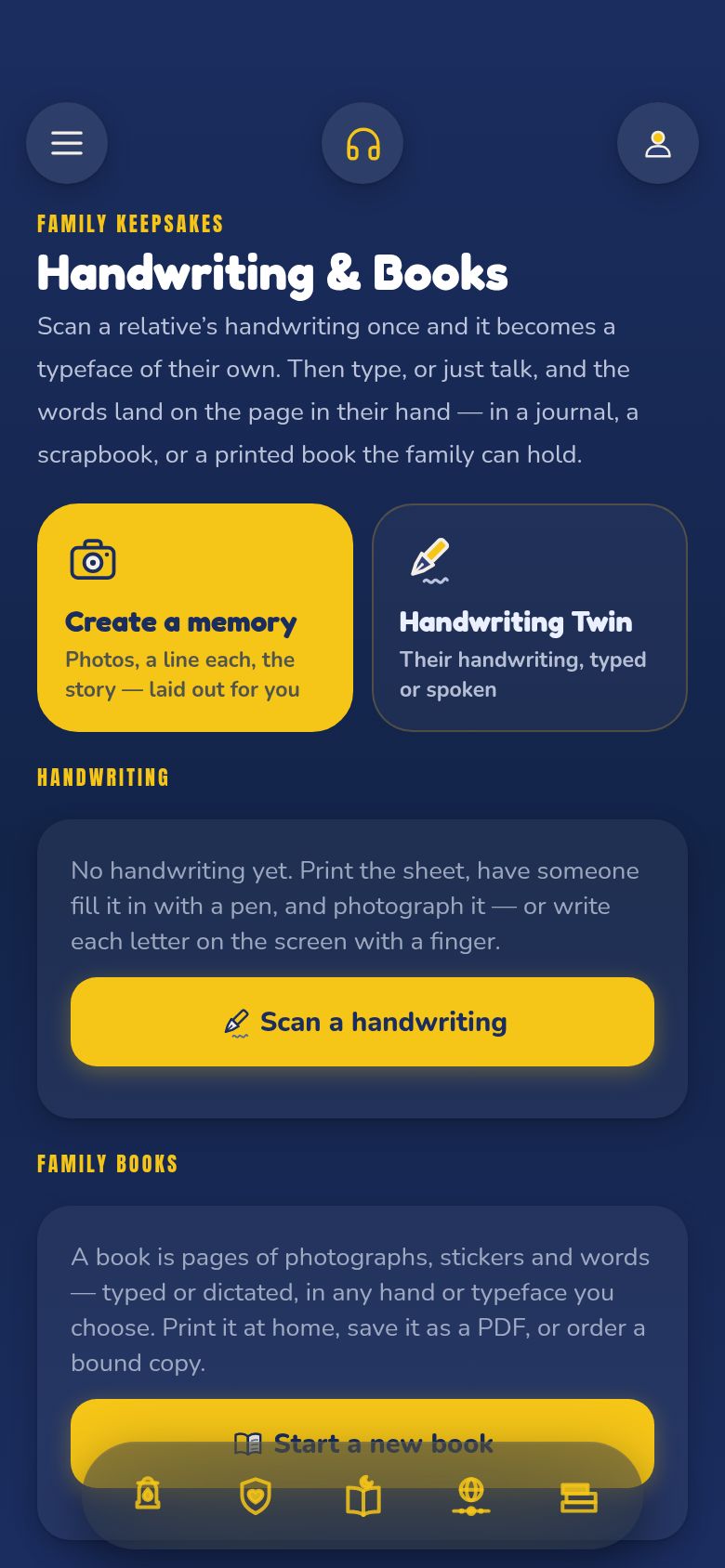
Create a memory from your photos, a line each, laid out for you. Handwriting Twin scans a loved one’s handwriting once and turns it into a font of their own, so new words appear in their hand. Then gather it all into a family book: print it at home, save it as a PDF, or order a bound copy.
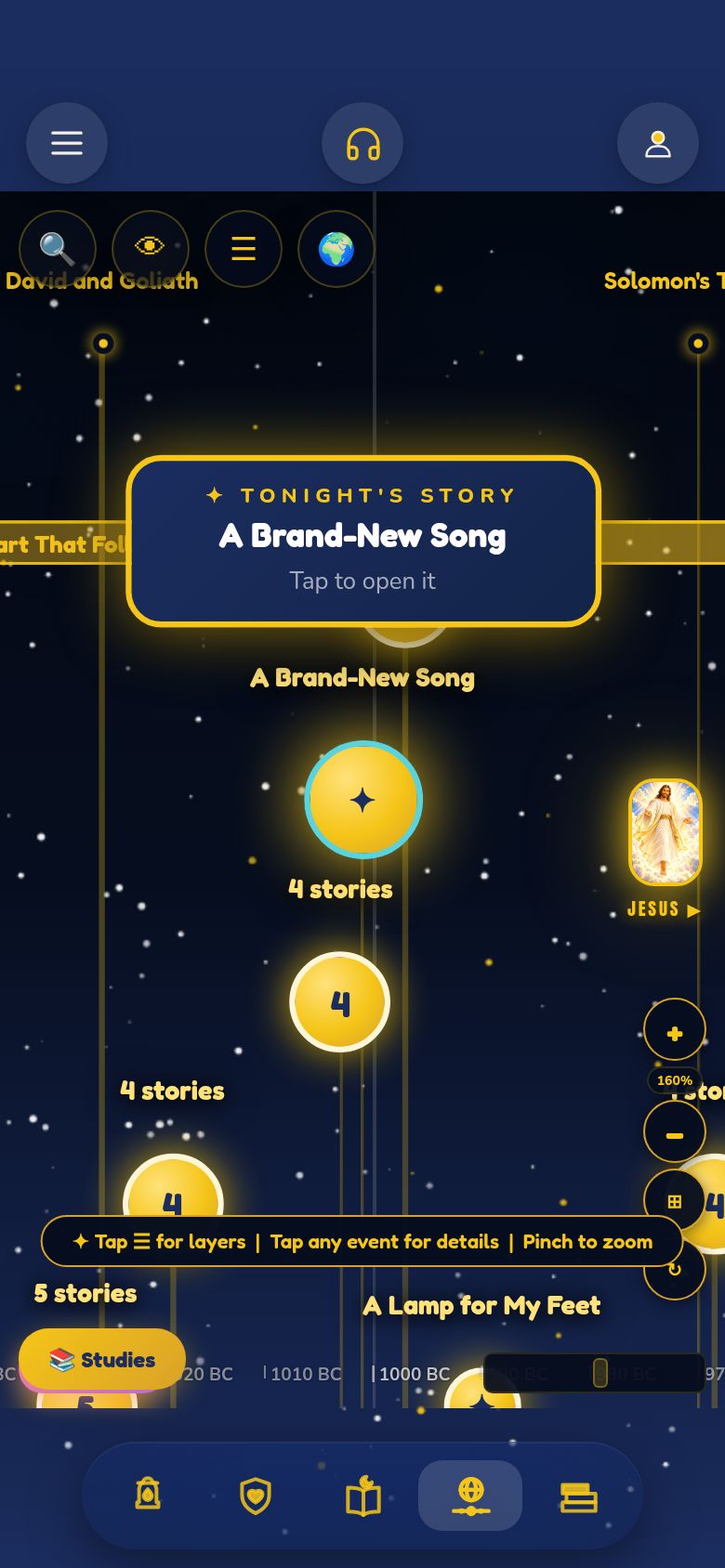
Every civilization, invention and turning point, laid out on one map of time around the moment everything else turns on: the Atonement of Jesus Christ. Zoom in or out, take a narrated tour, follow a study, open the maps, and add your own family to see where they stood.
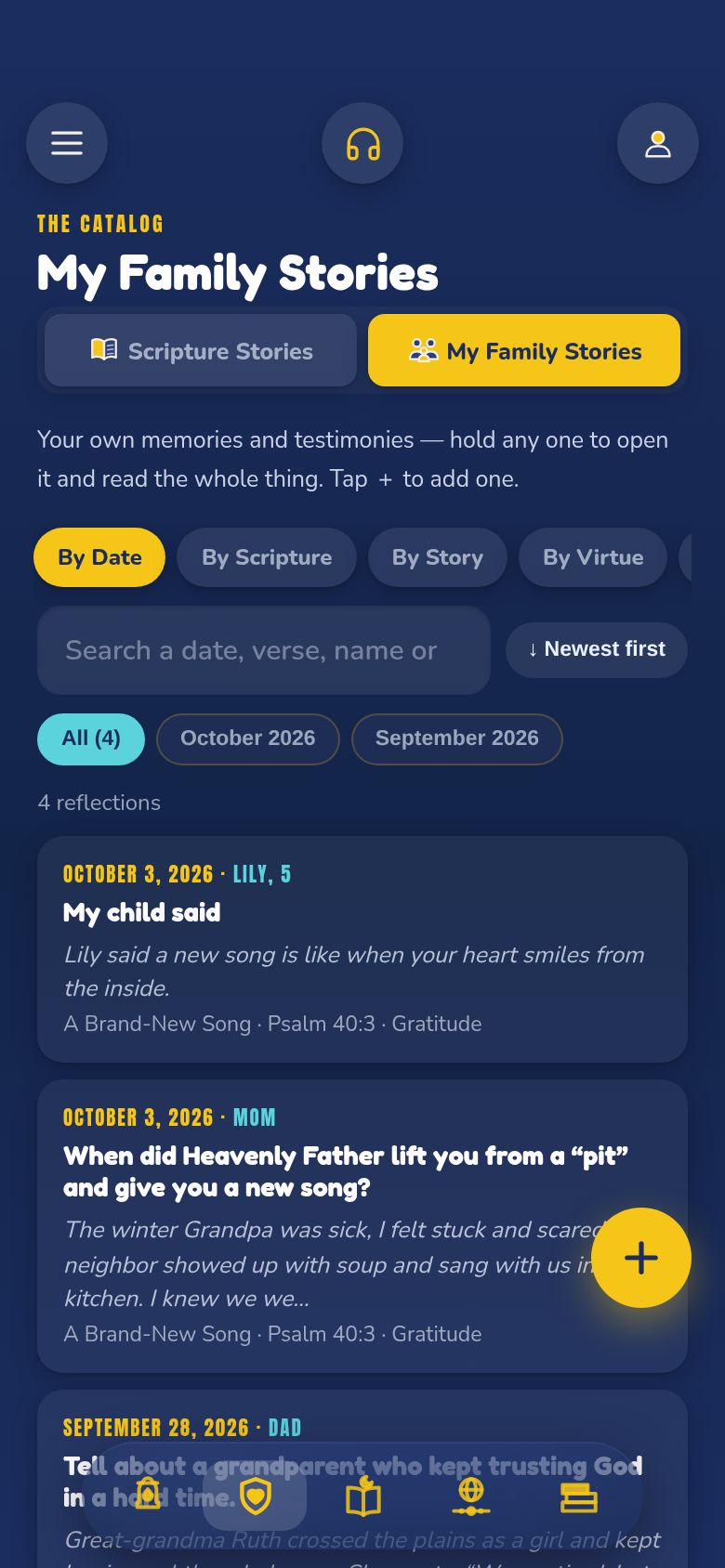
Every answer you write to A Parent’s Heart, every testimony and every funny thing your child said, saved privately in My Family Stories. Find any of it by date, scripture, story or virtue, and keep it for the years to come.
These are real screens from the Little Scripture Travelers app. Tap any one to see it bigger.
Swipe to see more →